I recently discovered that a Facebook Marketplace ad for my authentic Gucci shoes were flagged as counterfeit by their review "technology" and accused me of potentially violating their 'Rules." I was even more surprised by a review and appeals process that seemed a certain failure. At the bottom of this article, I'll comment on remedies if you experience this issue. I will also explain how to delete a flagged Facebook Marketplace ad, which I found impossible to delete using a desktop or laptop computer or mobile phone using a web browser! This article will also help you understand the nature of a larger counterfeiting problem and help you set expectations for selling authentic and genuine items on other marrketplaces and auction sites like eBay and Facebook Marketplace.


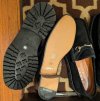
In my Facebook Marketplace listing, I made sure to include at least ten high resolution photos of the shoes, including the Gucci box, the shoe bag covers, the interior of the shoe with the model number and size etched into the leather, and images of top, bottom and sides of the shoes. The Gucci 016343 model are Black Suede Horsebit Loafers. There should have been little to no question that these were authentic


The reason why Facebook banned the listing of the shoes was because "we don't allow listings to sell or promote counterfeits or any content that infringes someone else's intellectual property rights." But they aren't counterfeit. I bought these Gucci horsebit loafers myself and they were sold by the Gucci store. I clicked on the button to see how Facebook made this decision and they explained as follows: "Our technology found that your listing doesn't follow our Commerce Policies. As a result, our technology took action." So Facebook's "technology" and the AI they have been touting somehow concluded that these were not, in fact, authentic Gucci shoes. I was thoroughly perplexed and decided to investigate the appeals process.
The blue "Request review" from the explanatory page takes the user to the start of the Facebook Marketplace review and appeals process. Here is where the journey gets interesting, starting with the first question for the user to answer.

I chose the only obvious answer. "This listing doesn't break the rules." Since the shoes are genuine and authentic, the listing is not in violation of any law of which I am aware. In fact, the First Sale Doctrine specifically allows me to resell the item I bought and describe them in a way so that it does not confuse the origin of the seller - which is me, not Gucci. See Chanel, Inc. v. WGACA, LLC, 18 Civ. 2253 (LLS) (S.D.N.Y. Sep. 14, 2018). The First Sale Doctrine (17 U.S.C. § 109) is a legal principle which allows the owner of a lawfully purchased item that is protected by intellectual property (such as copyright, trademark) to sell, lend, or dispose of that specific copy without the intellectual property owner's permission. But the process requires the user to answer a second question, which was even more confounding.

The Marketplace seller must select one of three responses to continue, but all clearly imply a level of culpability or wrongful conduct. None of the choices are what I thought would be obviously presented - that the item itself is authentic, legitimately purchased, and not conterfeit or stolen goods.
The first choice - "it's not offensive in my region" - implies that the post or conduct is offensive, but the region within which the user is posting is an exception to the rule. It isn't, but it's the least culpable of the three choices.
The second choice - "it was to raise awareness" - seems like a guilty plea with an attempt to carve out some exception. Technically I am raising awareness that I'm selling the product but it doesn't seem to matter.
The third choice - "it was a joke" - seems to be an outright guilty plea, confessing to a joke, so the post should be removed.
Pressing the continue button leads you to the confirmation page, which states that Facebook will "update you within a few days" as to a final decision. Furthermore: "Your case will be looked at again by our technology or a reviewer. We'll use the additional info that you gave us to improve our systems." The review didn't take days. It took literally seconds, so I assume no human actually reviewed the listing. Once again, it appeared that Facebook's technology erroneously identified my genuine and authentic Gucci shoes as counterfeit.

Clicking on the button for "How reviews work" it was explained that "Our technology and teams work in many languages tomake sure that our rules are applied consistently." So apparently a quick review using the same artificial intelligence or whatever "technology" was used came to the exact same conclusion a second time around. I was not surprised.


So how and why is this occurring and such a tech giant like Facebook? My own legal practice experience handling counterfeiting claims at eBay and copyright infringement claims online (DMCA - Digital Millennium Copyright Act) has me wondering whether Facebook is also passively succumbing to substantial legal pressure typically applied by luxury brands such as Gucci (Kering) and Louis Vitton (LVMH). Intellectual property enforcement mills and trolls are often used to aggressively send a torrent of DMCA takedown notices or IP infringement claims with relative impunity. Reviews of each claim creates a huge backlog at online marketplaces and is used as a method to combat sales of counterfeit products, which also has the additional benefit of curtailing legitimate sales of its goods in the secondary market. The technology being used to scan photos, as mentioned above, may also be flawed and using only more recent photos and data available. Older vintage items that may not in a data set for an AI-based sweep may result identifying authentic items as false positives for counterfeit items.
Last month a client who is an eBay seller of a few dozen vintage National Football League (NFL) stickers found their ads suspected. They received these NFL team stickers personally as a youth, yet what was clearly an authentic item that was legitimately obtained was stalled as a result of an infringement notice from eBay due to a complaint filed by an infringement mill representing NFL Properties. They alleged the stickers being sold were conterfeit without providing any explanation why or how they suspected a wrongful or illegal act. Detailed notices sent to this enforcement arm for the NFL, which remain unanswered as of the date of this article. My client has been prevented from selling on eBay just a few dozen NFL stickers for literally a handful of dollars for the imminent future.
In your web browser (I am using Chrome on a Windows 11 computer), right click anywhere or on the listing itself and click on the "inspect" button which will likely put you into a mobile view. In this view on the web the three dot menu button to modify the listing appears - but this does NOT appear if you try this on a web browser on a mobile phone. Click on to the three dots of the listing to open up the menu and choose delete listing. Close the inspect window to go back into the desktop view and refresh the browser to see the current view of the web page in your browser.

This is what the inspect window should look like on the right, with the mobile view of the suspended Facebook Marketplace ad appearing on the left, along with the three dot menu button which provides access to manage the ad, including deleting the listing.

Genuine Gucci shoes Facebook Marketplace ad flagged as counterfeit
Below are photos of five pairs of authentic Gucci shoes that were purchased several years ago from a Gucci store located in a major shopping outlet. I decided to sell one pair that was a gift for a relative that was too small and sat unnoticed in one of the closets for some time.In my Facebook Marketplace listing, I made sure to include at least ten high resolution photos of the shoes, including the Gucci box, the shoe bag covers, the interior of the shoe with the model number and size etched into the leather, and images of top, bottom and sides of the shoes. The Gucci 016343 model are Black Suede Horsebit Loafers. There should have been little to no question that these were authentic
Facebook Marketplace immediately cancels my listing alleging a policy violation
Almost immediately after posting, the Marketplace listing had a warning notice that "This listing may go against our rules for selling" and that it was not being actively shown to users. Clicking on the ad warning revealed Facebook's explanation for its ban, in that "it looks like your listing sells counterfeit goods or infringes someone else's intellectual property rights." How is selling Gucci shoes purchased from the Gucci store representing that I am personally selling the shoes infringing upon anyone's trademark? The shoes are not fake or counterfeit goods. I clicked on the link to find out more information about the rule that I allegedly violated.The reason why Facebook banned the listing of the shoes was because "we don't allow listings to sell or promote counterfeits or any content that infringes someone else's intellectual property rights." But they aren't counterfeit. I bought these Gucci horsebit loafers myself and they were sold by the Gucci store. I clicked on the button to see how Facebook made this decision and they explained as follows: "Our technology found that your listing doesn't follow our Commerce Policies. As a result, our technology took action." So Facebook's "technology" and the AI they have been touting somehow concluded that these were not, in fact, authentic Gucci shoes. I was thoroughly perplexed and decided to investigate the appeals process.
Facebook Marketplace review and appeals process for counterfeit item and policy violations
The blue "Request review" from the explanatory page takes the user to the start of the Facebook Marketplace review and appeals process. Here is where the journey gets interesting, starting with the first question for the user to answer.
Question 1: Why do you want another review?
I chose the only obvious answer. "This listing doesn't break the rules." Since the shoes are genuine and authentic, the listing is not in violation of any law of which I am aware. In fact, the First Sale Doctrine specifically allows me to resell the item I bought and describe them in a way so that it does not confuse the origin of the seller - which is me, not Gucci. See Chanel, Inc. v. WGACA, LLC, 18 Civ. 2253 (LLS) (S.D.N.Y. Sep. 14, 2018). The First Sale Doctrine (17 U.S.C. § 109) is a legal principle which allows the owner of a lawfully purchased item that is protected by intellectual property (such as copyright, trademark) to sell, lend, or dispose of that specific copy without the intellectual property owner's permission. But the process requires the user to answer a second question, which was even more confounding.
Facebook Marketplace Question 2: What should we know about your listing
The Marketplace seller must select one of three responses to continue, but all clearly imply a level of culpability or wrongful conduct. None of the choices are what I thought would be obviously presented - that the item itself is authentic, legitimately purchased, and not conterfeit or stolen goods.
The first choice - "it's not offensive in my region" - implies that the post or conduct is offensive, but the region within which the user is posting is an exception to the rule. It isn't, but it's the least culpable of the three choices.
The second choice - "it was to raise awareness" - seems like a guilty plea with an attempt to carve out some exception. Technically I am raising awareness that I'm selling the product but it doesn't seem to matter.
The third choice - "it was a joke" - seems to be an outright guilty plea, confessing to a joke, so the post should be removed.
Pressing the continue button leads you to the confirmation page, which states that Facebook will "update you within a few days" as to a final decision. Furthermore: "Your case will be looked at again by our technology or a reviewer. We'll use the additional info that you gave us to improve our systems." The review didn't take days. It took literally seconds, so I assume no human actually reviewed the listing. Once again, it appeared that Facebook's technology erroneously identified my genuine and authentic Gucci shoes as counterfeit.
Clicking on the button for "How reviews work" it was explained that "Our technology and teams work in many languages tomake sure that our rules are applied consistently." So apparently a quick review using the same artificial intelligence or whatever "technology" was used came to the exact same conclusion a second time around. I was not surprised.
Facebook AI appears to erroneously identify authentic Gucci and other luxury products
I found it interesting that even removing the Gucci name from the advertisement entirely still triggered a flag for the shoes being identified as potentially fake or counterfeit. The Armani suit that I posted earlier with the brand name but not showing the label as clearly as the Gucci shoes were not flagged and made it safely into the Facebook Marketplace. Now there are Gucci clothing and shoes available on the Facebook marketplace and I have to wonder whether the issue with these shoes are that Facebook cannot identify them or whatever technology being used simply doesn't have a model of shoes from six years ago in its database and flagging them. Reddit users report this being a problem for several years, especially for Gucci products.So how and why is this occurring and such a tech giant like Facebook? My own legal practice experience handling counterfeiting claims at eBay and copyright infringement claims online (DMCA - Digital Millennium Copyright Act) has me wondering whether Facebook is also passively succumbing to substantial legal pressure typically applied by luxury brands such as Gucci (Kering) and Louis Vitton (LVMH). Intellectual property enforcement mills and trolls are often used to aggressively send a torrent of DMCA takedown notices or IP infringement claims with relative impunity. Reviews of each claim creates a huge backlog at online marketplaces and is used as a method to combat sales of counterfeit products, which also has the additional benefit of curtailing legitimate sales of its goods in the secondary market. The technology being used to scan photos, as mentioned above, may also be flawed and using only more recent photos and data available. Older vintage items that may not in a data set for an AI-based sweep may result identifying authentic items as false positives for counterfeit items.
Last month a client who is an eBay seller of a few dozen vintage National Football League (NFL) stickers found their ads suspected. They received these NFL team stickers personally as a youth, yet what was clearly an authentic item that was legitimately obtained was stalled as a result of an infringement notice from eBay due to a complaint filed by an infringement mill representing NFL Properties. They alleged the stickers being sold were conterfeit without providing any explanation why or how they suspected a wrongful or illegal act. Detailed notices sent to this enforcement arm for the NFL, which remain unanswered as of the date of this article. My client has been prevented from selling on eBay just a few dozen NFL stickers for literally a handful of dollars for the imminent future.
Counterfeiting is a tremendous problem
Counterfeiting of luxury goods is estimated to be a trillion dollar problem that can be especially damaging to luxury goods manufacturers as it is a lucrative illegal business. Canal Street in New York City is one of the most famous physical marketplaces for fake Gucci and Louis Vitton handbags, Birkin bags, Hermes belts and Rolex watches. The Bloomberg era raids shuttered dozens of Canal Street counterfeiter stores and still made only a small impact to prevent fraud. In 2023, $35 million worth of counterfeit goods were seized and 18 people arrested in lower Manhattan. While enforcement mills and trolling create another substantial consumer problem, it is important to recognize the factors in play that create the issue and partially explain the response.Remedies and options to further appeal erroneous review results
Facebook is a private company. It sets its own marketplace rules and provides its own enforcement mechanisms. I could not find any simple way to appeal the review which I believe reaches a predictable erroneous conclusion. I also couldn't identify any Marketplace rule that I had violated, especially since others were selling similar goods. While resources elsewhere suggest alternative ways to reach Facebook and continue an appeals process, I couldn't find anything that made me think it was worth the investment in time and effort to do so. As such, I can't suggest any specific remedy should you encounter the same, except to say you should consider whether you are better off looking at other resale channels rather than engaging in an uphill battle to prove your case.How to delete a flagged Facebook Marketplace ad that seems unable to be deleted
This was the most difficult part of the process. I found no ability to delete the ad from my "selling" area on Facebook Marketplace, nor could I go to my user activity log and delete posts I saw there. Deleting those posts in the log removed them from the log but did not delete the flagged items in my Facebook Marketplace panel! Here are instructions on how to use almost any web browser on how to find the three dot menu button to delete the flagged or suspended Facebook Marketplace ad.In your web browser (I am using Chrome on a Windows 11 computer), right click anywhere or on the listing itself and click on the "inspect" button which will likely put you into a mobile view. In this view on the web the three dot menu button to modify the listing appears - but this does NOT appear if you try this on a web browser on a mobile phone. Click on to the three dots of the listing to open up the menu and choose delete listing. Close the inspect window to go back into the desktop view and refresh the browser to see the current view of the web page in your browser.
This is what the inspect window should look like on the right, with the mobile view of the suspended Facebook Marketplace ad appearing on the left, along with the three dot menu button which provides access to manage the ad, including deleting the listing.
- Legal Practice
- IP - Copyright Infringement
- Jurisdiction
- US Federal
-
 Another-Facebook-Marketplace-Violation.jpg
 -
 Gucci-Shoes-Close-Up.jpg
 -
 Gucci-Model.jpg
 -
 1771710446187.png
 -
 1771710463306.png

